

In the fast-evolving world of digital marketing, understanding the customer journey is more crucial than ever. In 2025, trends like AI-driven personalization, shoppable video ads, and omnichannel optimization dominate the scene. Businesses must rethink how they engage customers at every stage of the digital marketing funnel. They also need to convert and retain customers effectively. Let’s break down the modern customer journey, explore actionable optimization tips, and highlight real-world case studies to help you thrive.
The Modern Customer Journey: Stages & Optimization
The customer journey is no longer a straight line—it’s a dynamic, multi-touch experience shaped by countless digital interactions. Here’s how the journey typically unfolds today.
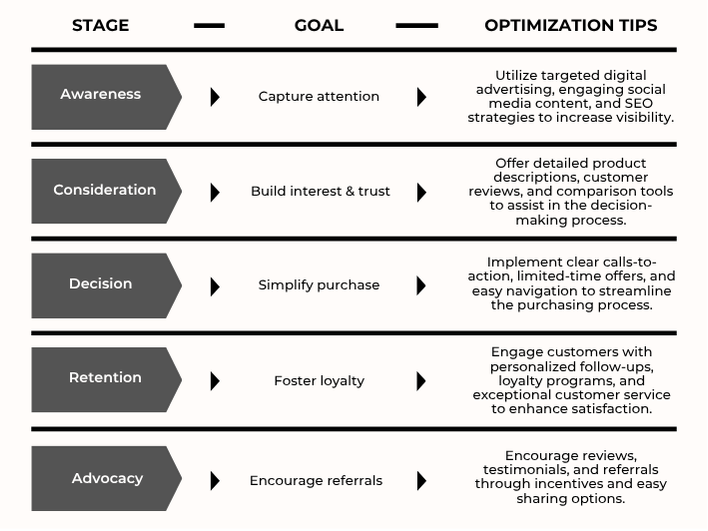
Each phase demands tailored messaging, channel tactics, and experience design to move users seamlessly down the funnel. A disjointed journey risks losing prospects at any stage — impacting revenue and brand perception.
Case Studies for Each Stage of the Customer Journey
Optimizing the customer journey in today’s digital marketing funnel requires more than theory—it demands actionable insights and inspiration from brands leading the way. Below, you’ll find a real-world case study for each stage, complete with data and tips you can apply to your business.
1. Awareness: Temu’s Gamified E-Commerce Strategy

Temu, an e-commerce platform launched in September 2022, rapidly gained traction in the U.S. market by integrating gamified elements into its shopping experience.
It combined massive paid media buys, including Super Bowl commercials. They used multiple in-app mini-games, such as flash quizzes, spin-the-wheel discount wheels, and “fruit-growing” puzzles. These games rewarded users with coupon credits or free products.
The platform also launched a referral program that acts as a viral multiplier. Users earn free products or deep discounts for each successful referral.
Semrush data showing that by June 2024, Temu not only commanded 100 million active U.S. users but also generated 420 million monthly website visits, driven in large part by its referral‐driven virality and in‐app gaming loop.
Internal Temu data (cited by ECDB) showed that gamified referrals led to a 40% reduction in user acquisition cost (UAC). This was observed compared to Shein during the first quarter of 2024.” This highlights the cost‐efficiency of their viral loop.
Strategy Tip: Leverage gamified elements and referral incentives to create an engaging shopping experience that encourages repeat visits and fosters brand loyalty.
2. Consideration: Sephora’s Virtual Artist App
Sephora’s Virtual Artist app, first introduced in 2016. This innovative tool allowed users to virtually try on thousands of makeup products. Users do this directly through the Sephora app or in-store digital mirrors. By integrating AR and AI technologies, Sephora addressed a critical consideration-stage barrier: the uncertainty of how products would look on individual users without physical trials. This personalized, interactive experience increased consumer confidence in online purchases.
To enhance user engagement and adoption of the Virtual Artist (VA) feature, Sephora implemented a targeted marketing strategy. They created a step-by-step tutorial video showcasing the VA’s capabilities and delivered it through push notifications, Content Cards, and in-app messaging to users who had viewed makeup products but hadn’t used the VA feature. This targeted approach aimed to educate users on the VA’s benefits and encourage trial.
The VA utilized facial recognition to detect users’ facial features and overlay virtual makeup in real-time, providing a realistic preview of products. Additionally, the app offered personalized recommendations and tutorials, further guiding users in their purchase decisions.
The implementation of the targeted campaign led to a 28% increase in user adoption of the Virtual Artist feature and a 48% increase in overall traffic to the AR tool. Moreover, users who engaged with the VA showed a 16% increase in usage-per-user, indicating higher engagement levels.
In a broader context, Sephora’s integration of AR technology contributed to a 35% increase in online make-up sales, as customers felt more confident in their purchase decisions after virtually trying on products.
Strategy Tip: Implement interactive tools like AR or virtual assistants to facilitate product exploration. Use them to aid decision-making. This approach enhances the consideration phase of the customer journey.
3. Decision: Nike’s Seamless Checkout Transformation Strategy
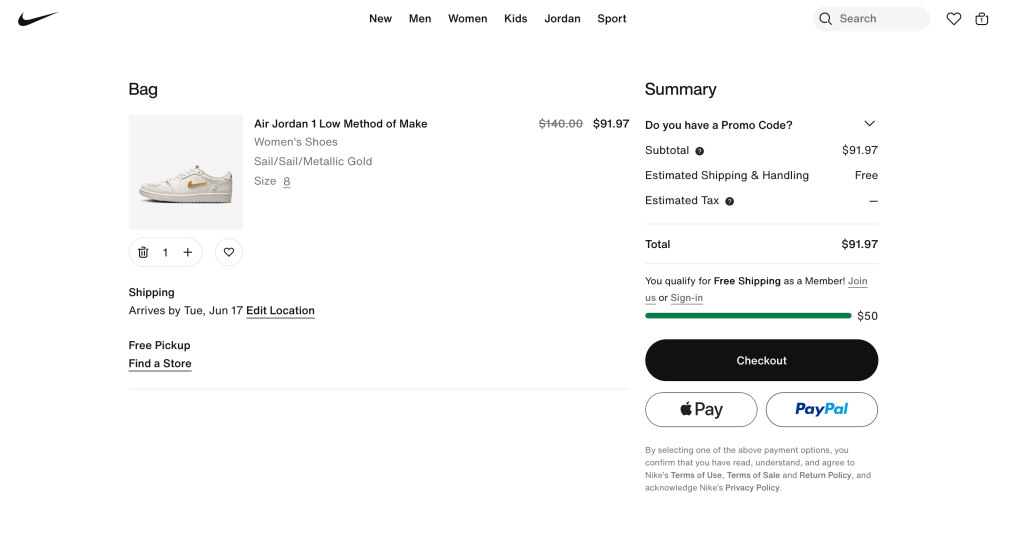
Nike’s digital journey shows what’s possible when a brand puts customer experience at the heart of its decision-stage strategy. As digital and direct-to-consumer channels surged to represent over a quarter of Nike’s global sales, the brand’s leaders recognized a common obstacle: checkout friction was causing too many customers to abandon their carts at the final step.
Industry data reveals a major challenge: about 70% of online shopping carts are abandoned, rising to 85.2% on mobile. Key causes include lengthy forms and slow page loading times.
In response, Nike overhauled their checkout, eliminating unnecessary steps, adding one-click payment options like Apple Pay, and ensuring persistent carts so shoppers could move seamlessly between devices. Performance was front and center: optimizations like lazy loading reduced delays, addressing the fact that even a 0.1-second delay in load time increases the bounce rate by 7%.
The payoff was significant. Nike saw a double-digit boost in mobile conversion rates and a measurable increase in average order value, according to Nike’s FY23 Impact Report. Most importantly, these improvements reinforced Nike’s reputation for a best-in-class digital experience, translating directly into higher DTC and digital revenue.
Strategy tip: To win at the decision stage, brands must ruthlessly simplify checkout and optimize for speed and mobile usability—turning the last mile of the digital journey into a powerful driver of conversion and loyalty.
4. Retention: Netflix’s AI-Driven Personalization Strategy
Netflix is a global leader in using artificial intelligence (AI) and machine learning to power its content recommendation engine. These hyper-personalized recommendations are at the core of Netflix’s ability to keep viewers engaged and reduce subscriber churn.
Netflix has deployed its new “Foundation Model for Personalized Recommendations,” a unified AI system that consolidates member preference learning from multiple algorithms. This centralization enhances consistency and relevance in recommendations across platforms, devices, and user interfaces. Drawing from billions of viewing sessions, the AI uses collaborative and content-based filtering to deliver content tailored to each viewer’s tastes.
Netflix’s advanced personalization has had a substantial impact. According to Justin Basilico, Netflix’s Director of Machine Learning and Recommender Systems, more than 80% of what Netflix users watch is driven by its recommender system. While the specific “20% increase in engagement” cited is an estimate in tech commentary, Netflix has consistently reported higher engagement and lower churn directly attributed to ongoing improvements in personalization.
Strategy Tip: Invest in AI-driven personalization to deliver tailored experiences and anticipate user needs—consistently engaging customers and reducing the risk of churn.
5. Advocacy: LEGO’s Global “Rebuild the World” Community Campaign
LEGO, a beloved brand across generations, has transformed its most passionate customers into global brand advocates by inspiring creativity and connection. Through its “Rebuild the World” campaign, LEGO motivates millions of fans to share their builds, ideas, and stories—amplifying the brand’s reach and fueling a powerful, community-driven movement.
First launched in 2019 and consistently refreshed, the “Rebuild the World” campaign encourages children and adults to imagine new possibilities with LEGO bricks. The company leverages digital and social platforms—especially Instagram, TikTok, and YouTube—to invite users to showcase their creations using the hashtag #RebuildTheWorld. LEGO supports this advocacy with global challenges, fan contests, and collaborations with cultural icons, demonstrating that “anyone can be a builder”. The brand also empowers its “AFOL” (Adult Fans of LEGO) community through ambassador programs and featured user stories.
The impact of LEGO’s community-first advocacy is significant. According to the company’s 2023 Annual Report, LEGO’s brand strength index remains one of the highest in the global toy industry. The campaign has generated billions of social impressions and led to a double-digit percentage increase in community content submissions. Research by Brand Finance and Interbrand has consistently placed LEGO among the world’s most reputable brands, with advocacy cited as a primary driver.
Strategy Tip: Empower your fans to co-create and share your brand’s story. Advocacy flourishes when customers feel ownership, recognition, and a sense of community around your mission.
Hands-On Guide: How to Map and Optimize Your Customer Journey
- Gather Data: Use analytics tools (Google Analytics, heatmaps) to identify where customers drop off or spend most time.
- Create Customer Personas: Understand your audience’s needs, behaviors, and pain points.
- Map the Journey: Outline each touchpoint and the customer’s goals at that moment.
- Audit Content & UX: Check if your website, emails, ads, and social media deliver relevant, timely content.
- Test and Iterate: Use A/B testing on CTAs, landing pages, and emails to improve conversion rates.
- Collect Feedback: Survey customers to identify gaps or frustrations.
- Invest in Automation: Use marketing automation to deliver personalized messages and nurture leads at scale.

Why Focus on the Customer Journey?
Brands that optimize the entire digital marketing funnel see higher engagement, increased sales, and stronger loyalty. According to Salesforce, 79% of customers say a seamless experience across multiple channels is very important to winning their business.
Understanding and optimizing your customer journey isn’t a one-time task; it’s an ongoing process that keeps your marketing aligned with customer needs and behaviors. By focusing on each stage and tailoring your strategy accordingly, you build a stronger, more user-friendly experience that turns prospects into lifelong fans.
 LJ Visual Studio
Leave a comment