
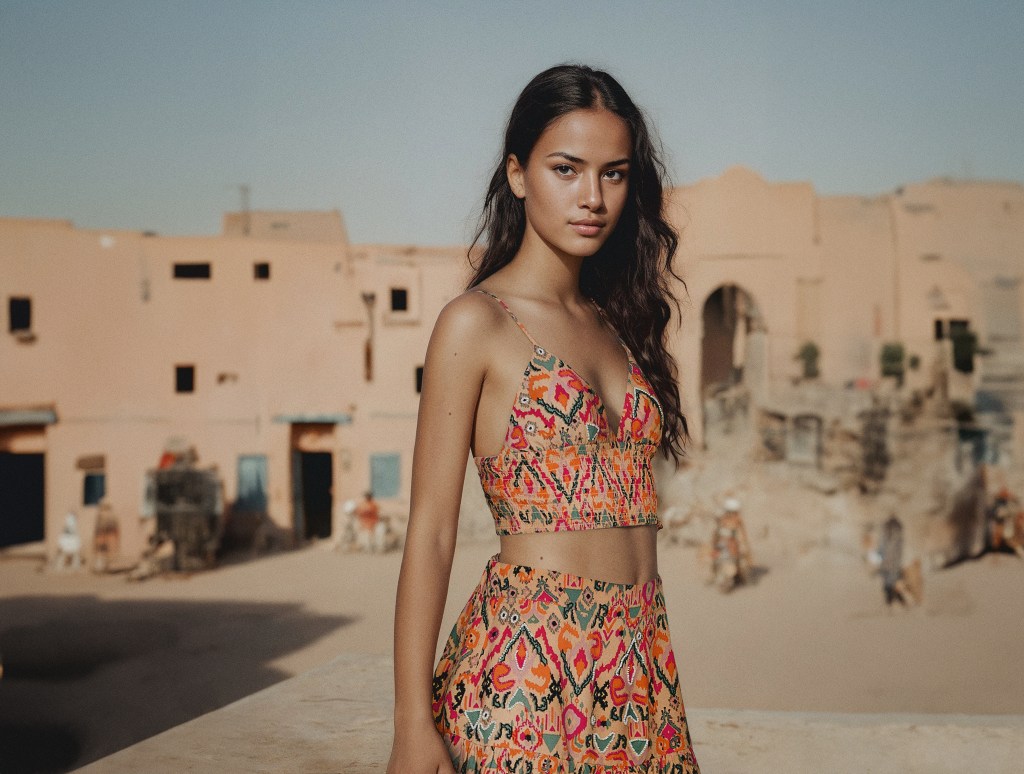
In July 2024, Mango announced that the campaign for its youth line (Mango Teen) limited‑edition “Sunset Dream” collection was generated entirely using artificial intelligence. The campaign formed part of Mango’s Strategic Plan 2024‑26 (“Earn” lever: technology, data, operational excellence) and launched across 95 markets. For visual marketing professionals, the campaign offers a clear lesson: the future of visuals is less about replacing human creativity than scaling it thoughtfully with tools.
1. Objective & Strategic Context
Mango entered this campaign with three key objectives:
- Modernize the visual language of its youth line to resonate with digitally fluent audiences.
- Showcase technological leadership through more than fifteen machine‑learning platforms developed since 2018.
- Improve production efficiency by using AI as a creative co‑pilot, amplifying human creativity.
2. Creative & Technical Approach
The workflow combined real photography with AI generation:
- Real photographs of garments from the Sunset Dream collection ensured data authenticity.
- Mango’s design and tech teams trained a generative‑AI model to position garments on models and produce editorial‑quality images.
- Art directors curated and refined AI‑generated visuals to maintain brand tone.
AI handled the heavy lifting—human teams preserved the soul of the visuals.
3. Visual & Brand Impact
The campaign’s visual reach extended across 95 markets, reinforcing Mango’s position as a technology‑forward brand. By combining AI generation with human curation, Mango demonstrated that visual identity and automation can co‑exist. When technology amplifies brand identity instead of replacing it, visuals feel both innovative and authentic.
4. Strengths & Considerations
Strengths:
- First‑mover advantage in AI‑generated fashion campaigns.
- Strategic integration within corporate innovation goals.
- Strong balance of automation and creative oversight.
Considerations:
- Human editing remains essential to ensure authenticity.
- Public metrics (engagement, ROI) remain undisclosed.
- Ethical and social concerns around AI‑created imagery should be managed proactively.
5. Key Takeaways for Visual Strategy & Branding
- Use real assets as training data for accurate brand representation.
- Define creative boundaries to keep AI aligned with brand tone.
- Embed technology in strategic planning, not just creative testing.
- Prioritise transparency about human involvement to build trust.
- Maintain global‑local balance when scaling visuals.
Conclusion
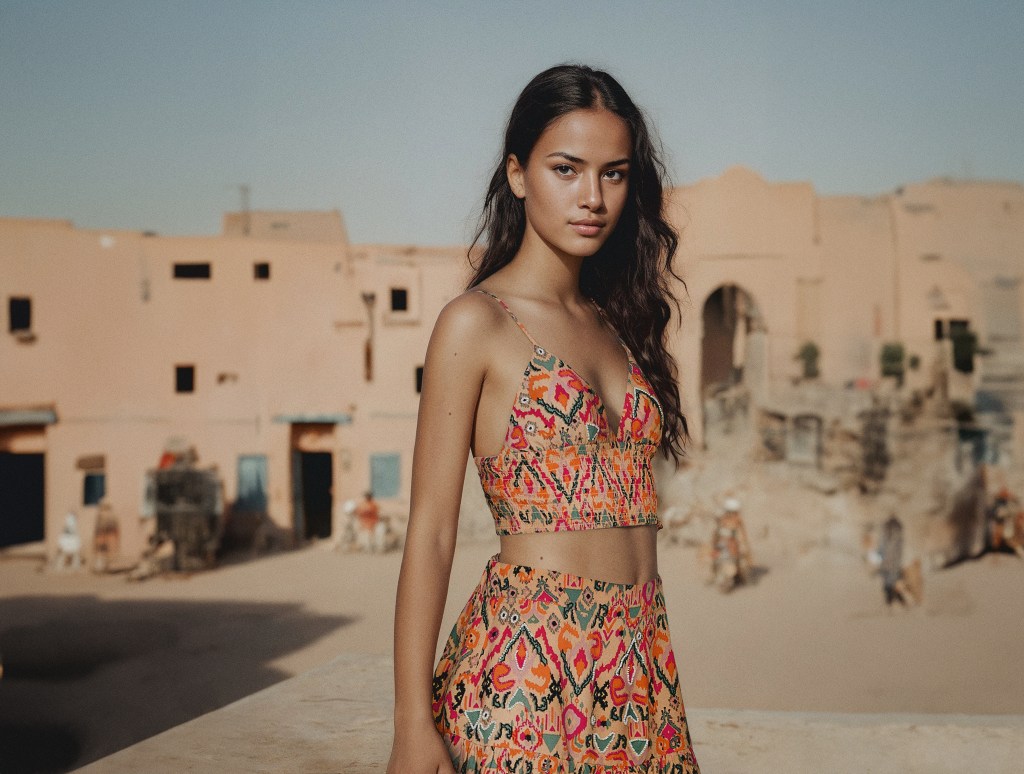
Mango’s “Sunset Dream” campaign is a thoughtful demonstration of how generative visuals can support brand storytelling, engage new audiences, and align with strategic goals. The brand used AI to enhance meaning—not just production. In the age of AI visuals, brands that balance innovation with identity will lead the conversation.
Ready to evolve your visual identity with AI tools and strategic oversight? Let’s design something memorable together.


Leave a Reply